There are so many German language exams out there. But which one should you actually take? I’ve helped thousands of students learn German through my YouTube channel and online courses, and many of them went on to take different German language exams.
In this guide, we’ll compare the most common German exams, explain how much they cost, where you can take them, and which one is best for your goals.
1. Goethe-Zertifikat
The Goethe-Zertifikat is probably the most well-known German language certificate worldwide. It’s offered by the Goethe-Institut and is widely accepted by employers, universities, and German authorities.
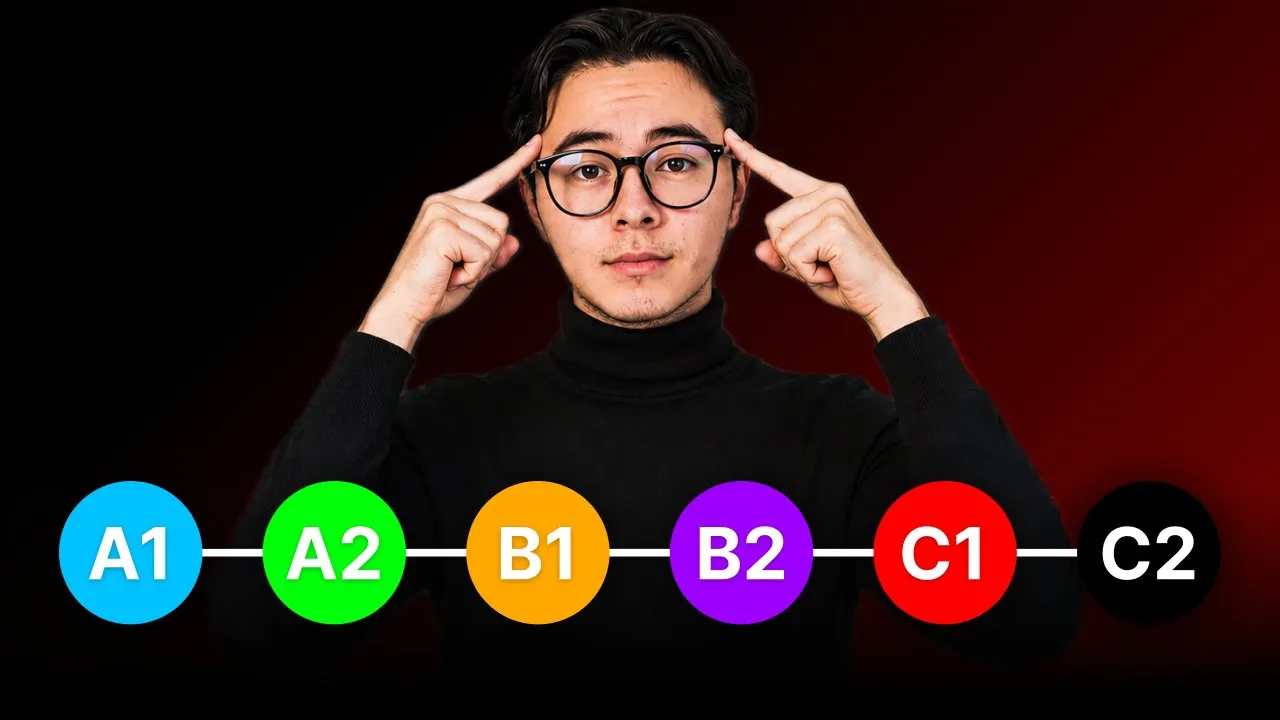
You can take Goethe exams at all six German levels, from A1 to C2. Each level has its own exam, so you can choose the one that matches your German skills. The exam tests four skills: reading, listening, writing, and speaking.
The price of a Goethe exam depends on your German level and where you take it. The higher the level, the more expensive the exam. For example, in Germany, A1 and A2 exams currently cost around €150 to €180, B1 and B2 around €250 to €300, and C1 and C2 around €340 to €360. In other countries, prices can be quite different, so make sure to check the current fees at your local exam center.
Goethe exams are available worldwide and there are exam centers in many different countries. You can find your nearest center on the official Goethe-Institut website. Exam results usually take anywhere from a few days to four weeks.
Goethe is a solid choice if you need a German certificate for work, Ausbildung, visa applications, or simply to prove your German level. It’s also a good option if you’re not sure what you’ll need the certificate for later, since it’s widely recognized.
But if your goal is to study at a German university, be careful. The Goethe C2 certificate is accepted by all German universities, but Goethe C1 and even B2 are not accepted by every university.
2. telc Deutsch
telc stands for The European Language Certificates. It’s another popular German exam and is especially common in Germany.
Just like Goethe, telc offers exams from A1 to C2.
Unlike Goethe, telc doesn’t have one fixed price. Every exam center sets its own fees. For example, in Munich, B1 and B2 exams cost around €190 to €250 at the moment. The C1 Hochschule exam costs around €210 to €260.
telc has over 3,000 exam centers worldwide. These can be private language schools or adult education centers called Volkshochschulen. You can search for nearby centers on the official telc website.
Exam results usually take around 4 to 6 weeks. If you fail, you can retake the exam. Depending on the telc exam, you might only need to redo the written or speaking part instead of the entire exam.
3. TestDaF
TestDaF stands for Test Deutsch als Fremdsprache, which means “Test of German as a Foreign Language.”
Unlike Goethe and telc, TestDaF is specifically designed for people who want to study at a German university. The focus is on academic German (understanding lectures, reading university texts, discussing academic topics).
TestDaF covers approximately B2 to C1. Instead of separate A1, B1, or C1 exams, you take one exam and get a score for each of the four skills.
There are three main score levels:
- TDN 3: Lower score
- TDN 4: Standard score for university admission
- TDN 5: Highest score
Most German universities accept TestDaF with TDN 4 in all four sections.
In Germany, the prices are €210 for the digital exam and €215 for the paper-based exam.
TestDaF is available at around 550 exam centers in 100 countries. You can take it outside Germany, which is an advantage if you’re still living in your home country. For the digital TestDaF, it takes around 3 weeks to get the results. The paper-based exam takes around 6 weeks.
You can find exam locations, prices, and dates at testdaf.de.
If you want to study a German-taught degree in Germany, TestDaF is one of the best options. You can take the exam before you move to Germany, and the certificate is accepted by German universities.
4. DSH
DSH stands for Deutsche Sprachprüfung für den Hochschulzugang. It’s another German language exam that is specifically designed for university admission.
The main difference compared to TestDaF is that DSH is organized by universities in Germany. This means you usually take the exam at a German university rather than at an international language institute.
The DSH exam tests advanced German skills (around B2 to C1) and gives you one of three passing results:
- DSH-1: Lower result, accepted only for certain programs
- DSH-2: Standard requirement for most German-taught degrees
- DSH-3: Highest result, sometimes needed for programs with higher language demands
DSH is often cheaper than the other university exams. For example, in 2026, the exam costs €140 at the University of Bonn, €150 at Freie Universität Berlin, and €165 at the University of Munich’s associated language school.
DSH exams are mainly offered at universities and university-related language centers in Germany. But not every university offers the exam to everyone.
Some publish the written exam results within a few days, but the full exam process, including the speaking test, can take a couple of weeks. If you fail, you can usually retake the exam.
This exam is a solid option if you’re already in Germany and want to enter a German university. But if you’re still living abroad, TestDaF is usually more convenient because you can take it in your home country.
5. Other German Language Exams
There are also a few other German exams worth knowing about.
ÖSD: The Austrian German Language Diploma offers exams from A1 to C2. It’s especially popular in Austria but is also recognized for certain purposes in Germany. Exams are available at around 400 centers worldwide.
DTZ (Deutsch-Test für Zuwanderer): This exam covers A2 to B1 and you find it in German integration courses. It’s most relevant for people who already live in Germany and need to prove their language skills for things like citizenship or residence permits.
DSD (Deutsches Sprachdiplom): This exam is mainly offered through participating schools, including German schools abroad. DSD I certifies B1 and DSD II covers B2/C1. You can use it for German university admission.
6. What German Level Do You Actually Need?
Before you choose an exam, you should know what German level you actually need for your goal.
Here is a quick overview of the most common requirements in Germany:
| Your goal | Typical German level |
|---|---|
| Family reunification visa | A1 (exceptions apply) |
| Ausbildung | B2 (sometimes B1) |
| German citizenship | B1 |
| Working as a nurse | Usually B2 |
| German-taught university degree | Usually C1-level proof (sometimes B2) |
| English-taught university degree | Often no German required |
7. Do German Language Certificates Expire?
Good news: Goethe, telc, and TestDaF certificates don’t have an expiration date. Once you pass the exam, your certificate stays valid forever.
But some universities, employers, and German authorities want you to show a certificate that’s no older than two years. So even though your certificate doesn’t technically expires, you should always check how old it can be for your specific application.
So, Which German Exam Should You Take?
If you want to work, do an Ausbildung, or prove your German language skills, I would recommend Goethe or telc. Both are widely recognized, and the best choice often comes down to price, location, and what your employer or authority accepts.
If you want to study at a German university, I would look at TestDaF, DSH, or telc Deutsch C1 Hochschule.
But no matter which German exam you choose, proper preparation is super important. These exams are highly structured and test specific skills, so simply watching random YouTube videos or memorizing vocabulary won’t be enough.
So if you want to prepare for a Goethe exam, you can check out our SpeedyGerman courses. We offer complete German courses from A1 to B2 and 6000+ students have used them to learn German and pass their exams.