Can you learn German in two months? Can you reach B2 in six months? And how long does it take to become fluent?
There is a lot of confusing information out there. Some people make it sound like you can learn German almost overnight and others say it takes many years. The truth is somewhere in between.
I’ve helped more than 6,000 students learn German through my online courses, so let me give you a realistic overview of how much time you should plan for each German level, from A1 all the way to C2.
1. How Long Does Each German Level Take?
First, we have to differentiate between two things: Are you just preparing for a German language exam? Or do you want to use German confidently in real life?
You need two different approaches for these. Learning German just to pass an exam goes quickly, since many exams are standardized. With the right exam prep, they are quite easy. But just because you to passed an exam doesn’t automatically mean you can follow every conversation at work, speak spontaneously with German friends, or understand a fast-speaking native speaker. Those skills usually take more time.
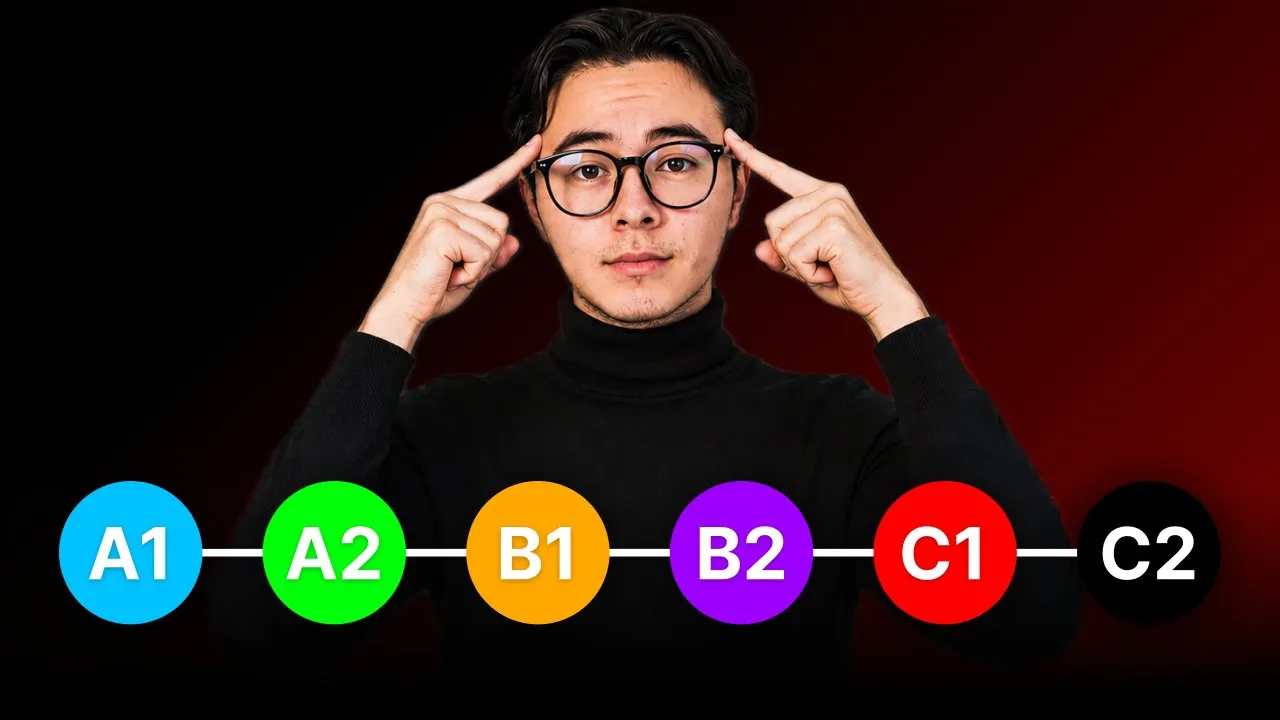
German has six main levels: A1, A2, B1, B2, C1, and C2. Here is our estimate for each:
| German Level | Time to be exam-ready | Broader Language Skills |
|---|---|---|
| A1 | 60-80 hours | 60-80 hours |
| A2 | 90-120 hours | 150-180 hours |
| B1 | 150-200 hours | 300-360 hours |
| B2 | 250-350 hours | 500-600 hours |
| C1 | - | 700-900 hours |
| C2 | - | 1,000-1,200 hours |
These are additional hours for each level and assume that you’ve already completed the previous one. So if you start from zero, you have to add up the hours.
Our A1-B2 exam preparation estimates are based on our experience teaching over 6,000 students. They include lessons, exercises, revision, and exam practice, not just watching videos.
The broader language estimates are rough guidelines, not official requirements. You can use these hours to calculate your own study duration.
A1 German: Beginner
Exam preparation: 60-80 hours | Broader skills: around 60-80 hours
A1 is where you start from absolute zero. You’ll learn basic grammar, common vocabulary, how to introduce yourself, and how to ask simple questions.
By the end, you should be able to order food, share personal information, and understand simple conversations when people speak slowly and clearly.
A2 German: Elementary
Exam preparation: 90-120 additional hours | Broader skills: around 150-180 additional hours
At A2, you’ll learn to talk about everyday topics like your family, work, shopping, travel, and daily routines.
You won’t be fluent yet, but you should be able to handle simple everyday situations in German. Becoming comfortable in real conversations will usually require additional listening and speaking practice.
B1 German: Intermediate
Exam preparation: 150-200 additional hours | Broader skills: around 300-360 additional hours
At B1, German starts to get more serious. The gap between the study hours for the exam and the broad language ability also gets bigger. You’ll learn to understand longer texts, explain your opinions, describe experiences, and handle familiar situations.
You can start to have proper conversations, but you’ll probably still make grammar mistakes and struggle to find certain words.
B2 German: Upper Intermediate
Exam preparation: 250-350 additional hours | Broader skills: around 500-600 additional hours
B2 is a major milestone. At this level, you should be able to understand more complex information, express your opinions clearly, and communicate with a good degree of fluency.
C1 German: Advanced
Around 700-900 additional hours for broader proficiency
At C1, you can understand demanding texts, discuss complicated topics, and use German confidently in academic and professional settings.
C2 German: Proficient
Around 1,000-1,200 additional hours for broader proficiency
C2 is the highest German language level. You can understand virtually everything you read or hear and express yourself precisely, even when discussing complex topics.
But reaching C2 doesn’t automatically make you a native speaker. It just means you’ve achieved an extremely high level of German proficiency.
3. Can You Reach B2 German in Two Months?
If you’re starting from zero, getting to B2 in just two months is unrealistic for most people. Based on our estimates, you would need around 550 to 750 hours of focused learning to go from A1 to B2 and prepare for the exams.
That’s around 69 to 94 hours of studying every single week for two months.
Just studying German for 10 hours every single day doesn’t mean you learn faster. At some point, studying more and more becomes less effective. Your brain needs breaks, and your language skills need time to develop. Especially when it comes to speaking and listening, you can’t just force everything into a few weeks.
So whenever you see someone who promises that you can learn German up to B2 in just two months, be careful.
4. Can You Become Fluent in German in One Year?
Yes, it’s possible to make incredible progress in one year.
Let’s say you study four hours a day, five days a week. That’s 20 hours of German learning every week.
At this pace:
- B2 exam preparation: Around 6-9 months from zero (550-750 hours).
- Broader B2 language skills: Around 12-14 months from zero (1,010-1,220 hours).
Many students are considered fluent, when they get to the B2 or C1 level of German.
Of course, four hours a day is really intense. But in Germany you have intensive courses that can get you to B2 or C1 within one year. They are extremely expensive, but completing them is not impossible if you dedicate yourself.
5. What’s the Best Way to Learn German?
Now that you roughly know how many hours you need to invest to learn German, you might ask yourself: how can I actually learn it? What are the resources?
I made a very popular guide on the best way to learn German as a beginner. I compare all the methods to learn German so that you can make a right decision.
And in case you want a structured program that takes you from A1 to B2, check out my SpeedyGerman online course. More than 6000 students have already used it to learn German and pass their language exams.