Over the past few years, I’ve helped students with hundreds of university applications to Germany and reached hundreds of thousands of international students on my YouTube channel. Along the way, I’ve gained some very unique insights into how German university admissions actually work.
So in this guide, I’ll explain your different options, which German certificates universities actually accept, and what I’d recommend if you’re planning to study in Germany.
1. German Requirements for English-Taught Degrees
First of all, Germany has a lot of degree programs that are taught entirely in English, especially at the master’s level (the DAAD Degree Database shows 2000+ programs). The good news is that for many of them you don’t need any German.
Case 1: Master’s in Materials Science (TU Darmstadt) is taught entirely in English. The university says that you don’t need any German language skills to apply. Instead, you’ll usually have to prove your English skills through an exam like IELTS or TOEFL.
Something many international students don’t know: Even if your degree is taught entirely in English, some universities still want you to learn a little bit of German.
Case 2: Bachelor’s in Aerospace (Technical University of Munich) is taught entirely in English, but you still need at least A2 German before the application deadline.
For other universities you don’t need any German when you apply, but they expect you to learn the language during your studies.
Case 3: Bachelor’s in Artificial Intelligence (Deggendorf Institute of Technology) is taught in English, but students have to demonstrate A2 German by the end of their studies.
And at the Technical University of Ingolstadt, students in certain English-taught master’s programs have to show an A1 level of German by the end of their first semester.
Depending on the university, you also can have mandatory German language classes in your degree. So there isn’t one rule that applies to every university. More on that in the last section of the article.
2. German Requirements for German-Taught Degrees
But what if you want to study a degree program in German? In that case, the requirements are usually much higher.
For most German-taught degrees, you need to speak German at the B2 to C1 level. Many universities ask for C1 in case you want direct admission.
For example, if you want to study a German-taught master’s program at the Technical University of Ingolstadt, you need B2 German. But at the University of Freiburg, you need C1 German for most bachelor’s programs.
And of course, you can’t just show up and tell the university that you’re fluent in German. You have to prove it with an officially recognized language certificate.
The most common accepted exams are TestDaF, DSH, and telc Deutsch C1 Hochschule. They prove that your German is good enough to study at a German university.
Here something I want you to be careful about: Over the years, I’ve seen hundreds of student cases and university applications, and one thing I’ve noticed is that some universities don’t accept the Goethe C1 certificate as sufficient proof for admission.
This sounds a bit strange because Goethe C1 is obviously an official German language certificate.
For example, the Technical University of Munich doesn’t normally accept Goethe C1 for its German-taught degrees. And it’s the same at the University of Freiburg. Instead, they want you to show certificates like TestDaF, DSH, telc Deutsch C1 Hochschule, or Goethe C2.
So before you spend months prepping for a German exam, please check which certificates your university accepts. Otherwise, you invest sweat, blood, and tears into an exam that doesn’t even qualify you for your dream university.
I’ve also written a full guide about Which German Exam Should You Take?, where I explain the different certificates in more detail.
3. Should You Study in German or English?
Just because you technically meet the German language requirements doesn’t mean that studying in German is the best choice for you.
Let’s say you’ve just passed your B2 exam. That’s a proper achievement. But remember: studying at a German university is very different from having normal everyday conversations in German.
You’ll have to understand what your professors are saying, read difficult texts, take exams, and give presentations. And doing all of that in German when you’re still learning the language can be really hard.
So don’t force yourself to study in German if you’re not confident in your language skills yet. There is nothing wrong with an English-taught degree. But even if your university doesn’t require German, please learn German. This is the number one mistake I see over and over again.
At university, life is fine with English. But outside of it, the German makes your life so much easier. Doesn’t matter if you’re looking for a job, visiting a doctor, dealing with government offices, or just making German friends.
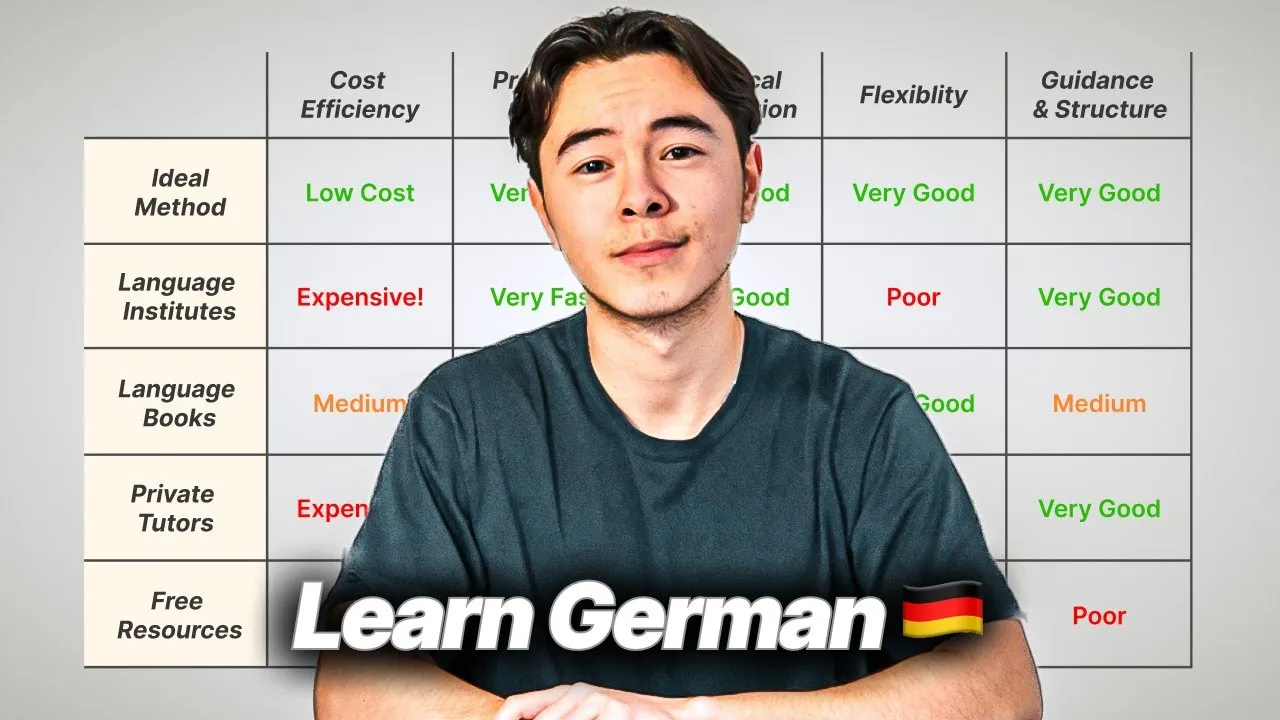
Nowadays, there are so many ways to learn German. So if you’re just getting started, check out my guide on the Best Ways to Learn German as a Beginner.
I’ve also written a separate guide on How Long Does It Take to Learn German?, where I break down the different levels and how much time you need to reach them.
5. How to Check Your University’s German Language Requirements
Before you apply to any university, check the official language requirements of the degree program. You can usually find this information on the university’s website under admission requirements.
Pay attention to three things: the German level you need, which certificates the university accepts, and when you have to submit your language certificate.
For example, some universities allow you to apply before you’ve completed your language exam. But you’ll still need to provide the certificate before enrollment.
If anything is unclear, you can always write an email directly to the university’s international admissions office (yes, they actually reply!).