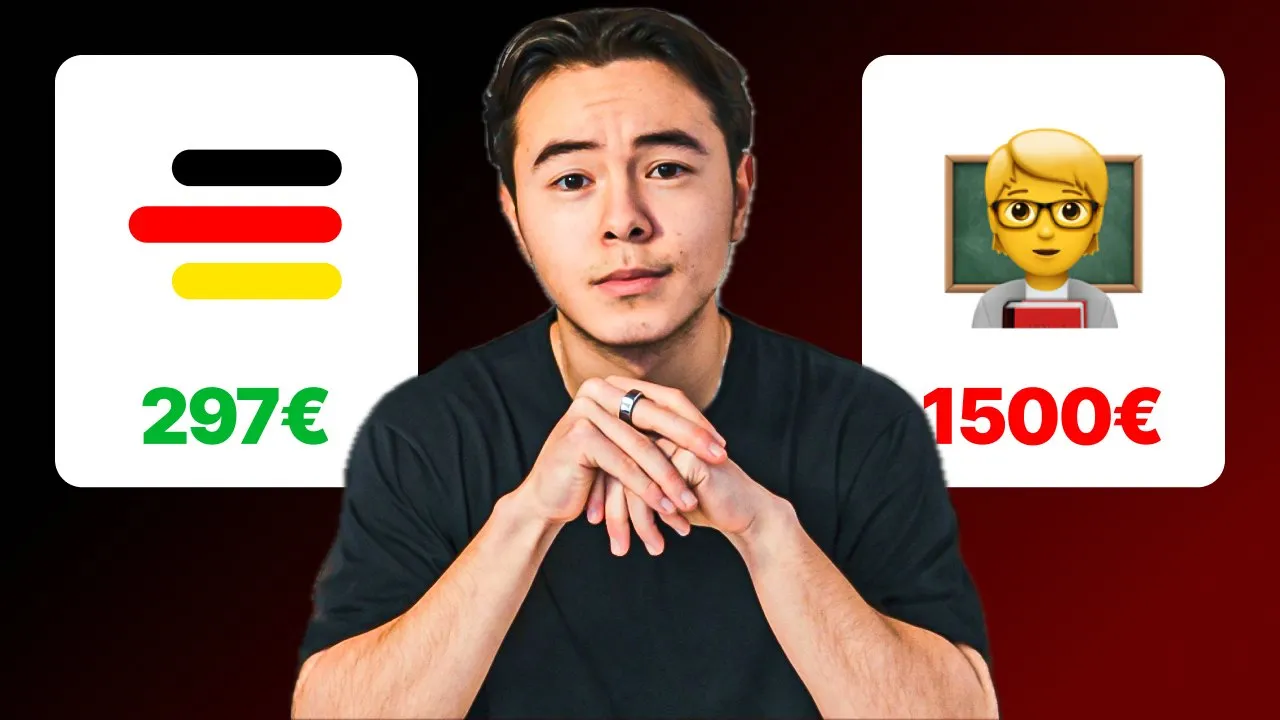
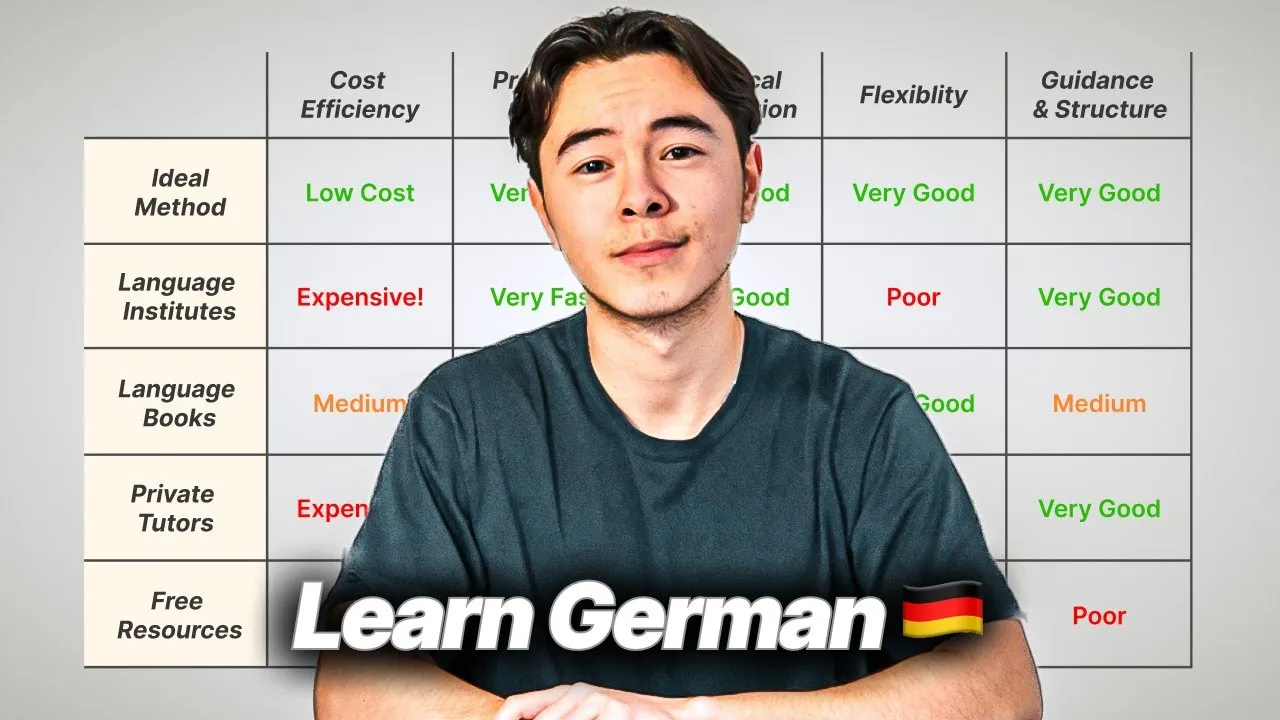
How long does it actually take to become fluent in German? Most learners need to reach around B2 or C1 to speak German with confidence and feel comfortable.
But be careful: Being fluent in German doesn’t necessarily mean speaking perfect German. So let’s look at what fluency actually means, how long it takes to get there, and what you can do to speed up the process.
What Does It Actually Mean to Be Fluent in German?
There is actually no official definition of fluency. The Common European Framework of Reference for Languages (CEFR) divides German proficiency into six levels, from A1 (beginner) to C2 (proficient). But none of these levels is officially called “fluent.”
In simple terms: being fluent in German means that you can communicate naturally without translating everything in your head. You can have conversations, explain your opinions, understand what other people are saying, and express your thoughts without stopping every few seconds to search for the right word.
For most people, B2 is a good starting point for conversational fluency. At this level, you can have longer conversations, discuss different topics, and communicate independently in most everyday situations.
At C1, things become easier. You can have very spontaneous conversations, understand more complex topics, and use German in professional or academic environments.
How Long Does It Take to Reach B2 or C1 German?
So how many hours do you need to study German before you become fluent, aka get to B2 or C1?
As a rough estimate, you can use the following timelines
| German Level | Estimated Total Study Hours |
|---|---|
| B2 (Upper Intermediate) | 1,000-1,200 hours |
| C1 (Advanced) | 1,700-2,100 hours |
These estimates are for developing broad language ability. This means you can understand, speak, read, and write German in everyday situations with confidence. The hours include active learning and practice, not just watching German lessons.
But if your goal is just to pass a German exam, you can prepare in much less time.
If you want a more detailed breakdown of how long it takes to reach each German level, from A1 all the way to C2, check out our complete guide on how long it takes to learn German.
What Factors Affect How Quickly You Become Fluent in German?
Not everyone learns German at the same speed. Some people reach B2 after a year; others are still struggling after 3 years. So what makes the difference?
One factor is your native language. Let’s say you already speak Dutch or another language closely related to German. So German vocabulary and grammar is easier to understand. If your native language is very different from German (let’s say Chinese or Japanese), you might need more time.
But if you are reading this article, chances are you can already speak good English. German is actually quite easy to learn for English speakers.
Another factor is how consistently you study. It’s more effective to learn German for one hour every day than studying for seven hours once a week. Consistent exposure wins every time.
Your environment also makes a difference. If you live in Germany and interact with German speakers daily, you have more opportunities to practice. But living in Germany doesn’t automatically make you fluent. You still need to actively use the language.
Now, the most important factor for conversational fluency is how often you actually speak German. You can study grammar for 500 hours and never practice speaking; you will still struggle to have a simple conversation.
How Can You Become Fluent in German Faster?
After teaching German to thousands of students on my YouTube channel and in my online courses, there are a couple of action steps I recommend.
First, follow a structured learning plan. Instead of jumping between random YouTube videos, apps, and textbooks, work through the German levels step by step. This way, you build a strong foundation in grammar and vocabulary and don’t miss important topics.
Second, start speaking German as early as possible. You don’t need to wait until B2 to have conversations. Even at A1, you can introduce yourself, ask simple questions, and talk about your daily routine.
Third, listen to German every day. This can be watching German YouTube videos, listening to podcasts, or watching German movies.
And if you’re looking for a structured way to learn German, you can also check out our SpeedyGerman courses from A1 to B2. Thousands of students have used our courses to learn German and pass their language exams.